
Improve Warehouse Efficiency

Your warehouse is probably losing time in places nobody is watching.

When a warehouse is not broken but is not working — picking takes too long, receiving creates bottlenecks, the team works harder than the layout should require — targeted improvements can recover significant time without a full fit-out.

Most warehouse inefficiency comes from a small number of recurring problems

The warehouse is operational. Stock is moving. Orders are being filled. But the process costs more time and effort than it should.

This is a different problem from "the warehouse is too small" or "we need to relocate." This is a functioning site where the losses are hidden in daily friction — picks that take an extra minute each, receiving that consistently backs up, forklift and pedestrian movements that slow each other down.

The challenge is that these losses feel ambient. No single incident is large enough to trigger a formal response. The cumulative cost is significant, but it is never written on one invoice.

A useful diagnostic is to trace three processes: how an inbound pallet moves from the dock to its storage position; how an outbound order is picked from start to packed; and how the receiving team and the picking team move through the space at the same time. The points where those paths conflict, or where one process stalls waiting for another, are usually where the efficiency loss is concentrated.

"Most warehouse efficiency losses live in three places: pick paths, receiving, and where forklifts and pedestrians share the same space."

If picking takes longer than it should, the path is usually the problem

Picking is the most time-consuming activity in most warehouse operations. Even small reductions in per-pick travel time, multiplied across hundreds or thousands of picks per day, produce material gains.

Pick path length

In many warehouses, the fastest-moving lines are not stored in the positions that minimise pick travel. Slow-moving archive stock occupies prime picking positions near the dispatch staging area. High-velocity items are stored at the furthest end of the racking run. The result is that every pick for the most common lines involves the most travel.

A slotting review — examining which SKUs move most frequently and assigning storage positions accordingly — is often the single highest-return efficiency improvement available to an operating warehouse.

Dead ends and return paths

Warehouse layouts often develop ad hoc aisle configurations as racking is added over time. The result can be dead-end aisles that require pickers to backtrack, or aisle configurations that force long traversals to reach adjacent zones.

Where dead ends exist, the fix may be as simple as opening a cross-aisle, or as involved as reconfiguring a run of racking. The diagnosis should precede the solution.

Pick zone assignment

In operations with multiple pick zones, inefficiency often arises from poor zone assignment — one zone consistently generates more picks than others, creating a bottleneck at the busiest period.
Read nextWorkflow DesignPLACEHOLDERA deeper look at pick paths, staging zones and movement design.
Myth

Myth: "The highest storage density wins."

Reality: Effective beats crammed. Aisles, clear space and cleanliness aren't wasted metres — they're what let people and equipment move at full speed, and they make a workplace people actually want to work in.

When the dock is the bottleneck, the whole warehouse slows down

Receiving and dispatch congestion is one of the most common sources of warehouse inefficiency. It is also one of the most disruptive — it affects both inbound supply and outbound fulfilment simultaneously.

Insufficient staging space

Receiving congestion most commonly arises from insufficient staging space between the dock and the storage system. Inbound pallets arrive faster than they can be processed for putaway, and they accumulate at the dock because there is nowhere else to put them.

The staging zone between the dock and the first racking run needs to be large enough to hold a full inbound delivery while the previous delivery is still being put away. In many warehouses this zone has been gradually compressed as additional racking was added.

Receiving and dispatch in the same zone

Where inbound and outbound flows share the same dock space, they will conflict at peak periods. Inbound pallets stage where outbound orders need to accumulate. The team makes decisions at speed under pressure, and errors increase.

Physical separation of receiving and dispatch — even partial separation — reduces the conflict and the cognitive load on the team.
Dispatch staging shortfalls

Outbound orders that are picked before the truck arrives and have nowhere to accumulate end up in the picking aisles, blocking the team. Adequate dispatch staging — sized for a full outbound load, not just the average order — removes this constraint.
Common Mistake

The under-specified shelving order.

A customer once asked us for light-duty shelving — the cheapest option that looked right. Their real load weights needed archive-grade shelving. It's the most common estimating error we see: weights are guessed, not measured, and the system is bought before anyone checks. Measure first. Then buy.

Where forklifts and pedestrians share routes, everyone slows down

Traffic conflicts are simultaneously a safety risk and an efficiency problem. Forklifts operating in picking aisles, pedestrians crossing forklift routes, shared zones with no clear priority — these situations create near-miss events and require all parties to slow down to manage the conflict.

Quick traffic audit — check each of these in your warehouse:

  • Do forklift operating routes cross picking aisles?
  • Do pedestrians need to enter forklift zones to reach storage or work areas?
  • Are there clearly marked pedestrian paths throughout the site?
  • Are forklift exclusion zones enforced, or do they depend on verbal management?
  • Does the receiving dock entry accommodate both forklift and foot traffic simultaneously?

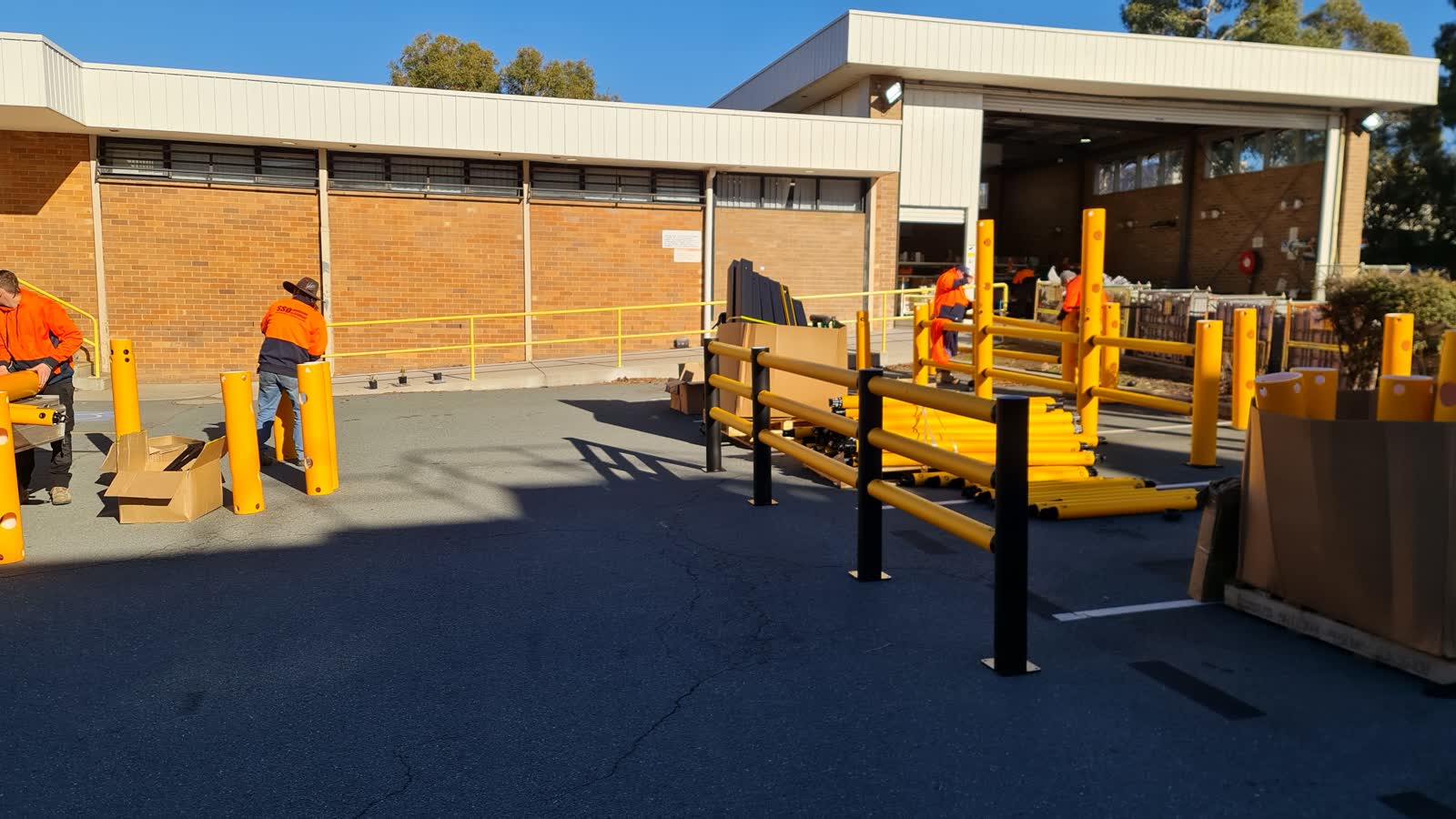
Where conflicts exist, the range of practical solutions runs from floor marking (fast, low cost) to physical barriers (more permanent, higher upfront) to racking reconfiguration that separates zones more definitively. The right solution depends on the nature and frequency of the conflict.

Read nextSafety BarriersPLACEHOLDERPhysical separation where movement and safety issues overlap.

"Traffic separation is a safety requirement and an efficiency gain simultaneously. The forklift and the picking team moving at full speed in separate zones are faster than both moving cautiously in the same space."

Where stock lives determines how efficiently it moves

Stock location is rarely reviewed once the warehouse is operational. The original assignments — often made based on the first SKU loaded in each position — persist through product range changes, seasonal shifts and volume changes that make them obsolete.

A slotting review identifies:

  • Which SKUs move at highest velocity and should be closest to the pick start point and dispatch staging
  • Which SKUs move in groups and should be located adjacently to minimise pick travel
  • Which slow-moving or seasonal lines occupy prime positions unnecessarily
  • Which products have grown in volume and need more storage positions

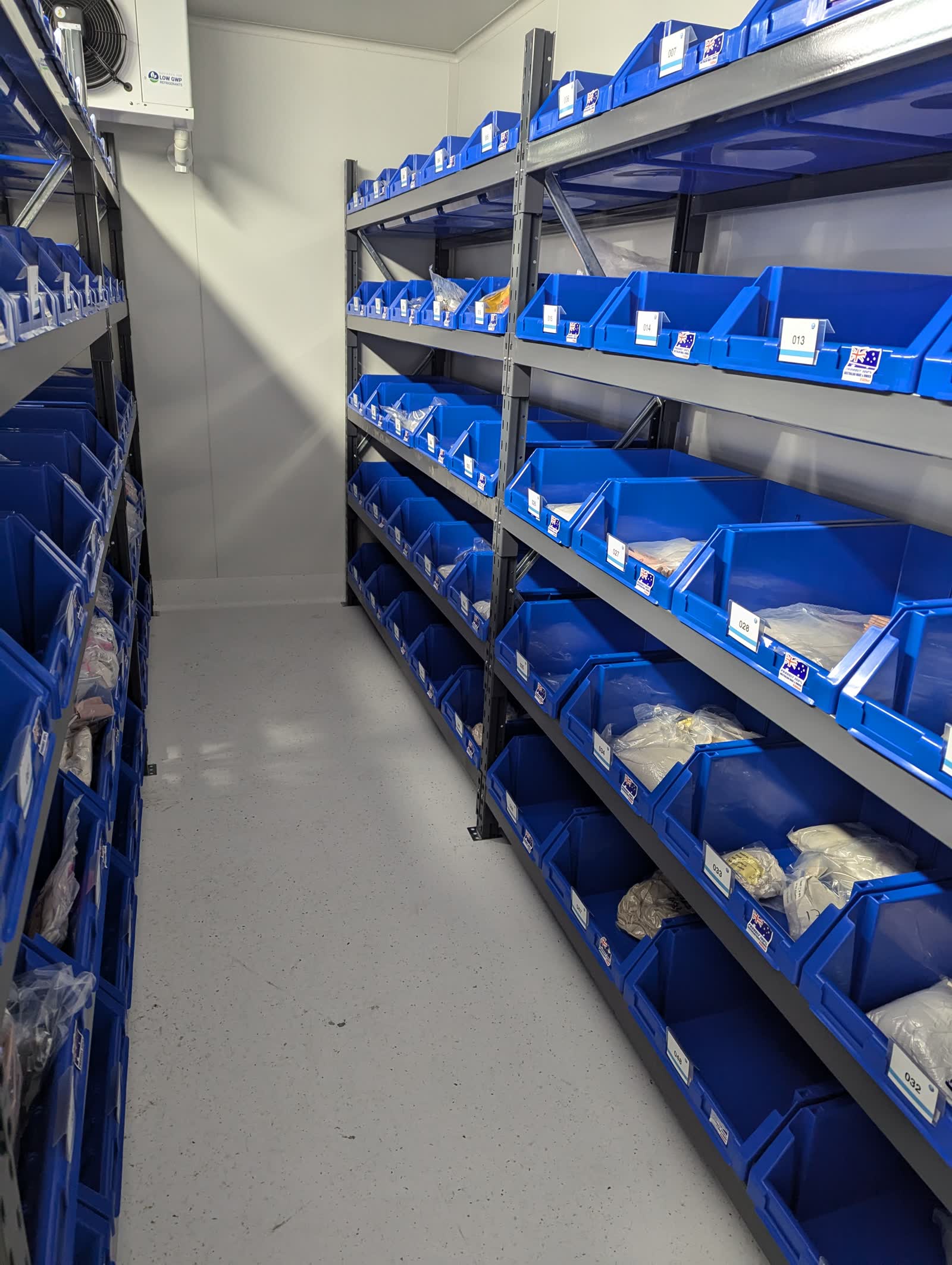
Slotting improvements do not require new racking or structural changes. They require analysis and physical stock relocation — and they can produce significant efficiency gains with minimal cost.

pallet racking

  • High-velocity SKUs belong closest to pick start and dispatch
  • Grouped SKUs reduce travel when stored adjacently
  • Seasonal peaks should not permanently occupy prime storage positions
  • Slotting is typically the lowest-cost efficiency improvement available

Targeted improvements have limits — knowing where those limits are

Targeted improvements can resolve most common warehouse efficiency problems. They have limits.

If the physical layout is fundamentally misaligned with the operation — aisle widths are wrong for the equipment, the dock configuration cannot support the volume, the racking system is incompatible with the required pick method — targeted changes will produce incremental gains at best. The root cause is a layout that does not fit the operation.

In that situation, a reconfiguration conversation is more useful than a slotting review.

Read nextExpand Your WarehouseWhen the efficiency issue is tied to space pressure.

A New Warehouse Fit-Out may be the practical next step when the layout needs rethinking rather than adjusting.

The distinction between "the layout needs adjusting" and "the layout needs rethinking" is not always obvious from inside the day-to-day operation. SSO's initial conversation usually surfaces which situation applies.

Project spotlight

Real project spotlight

Project

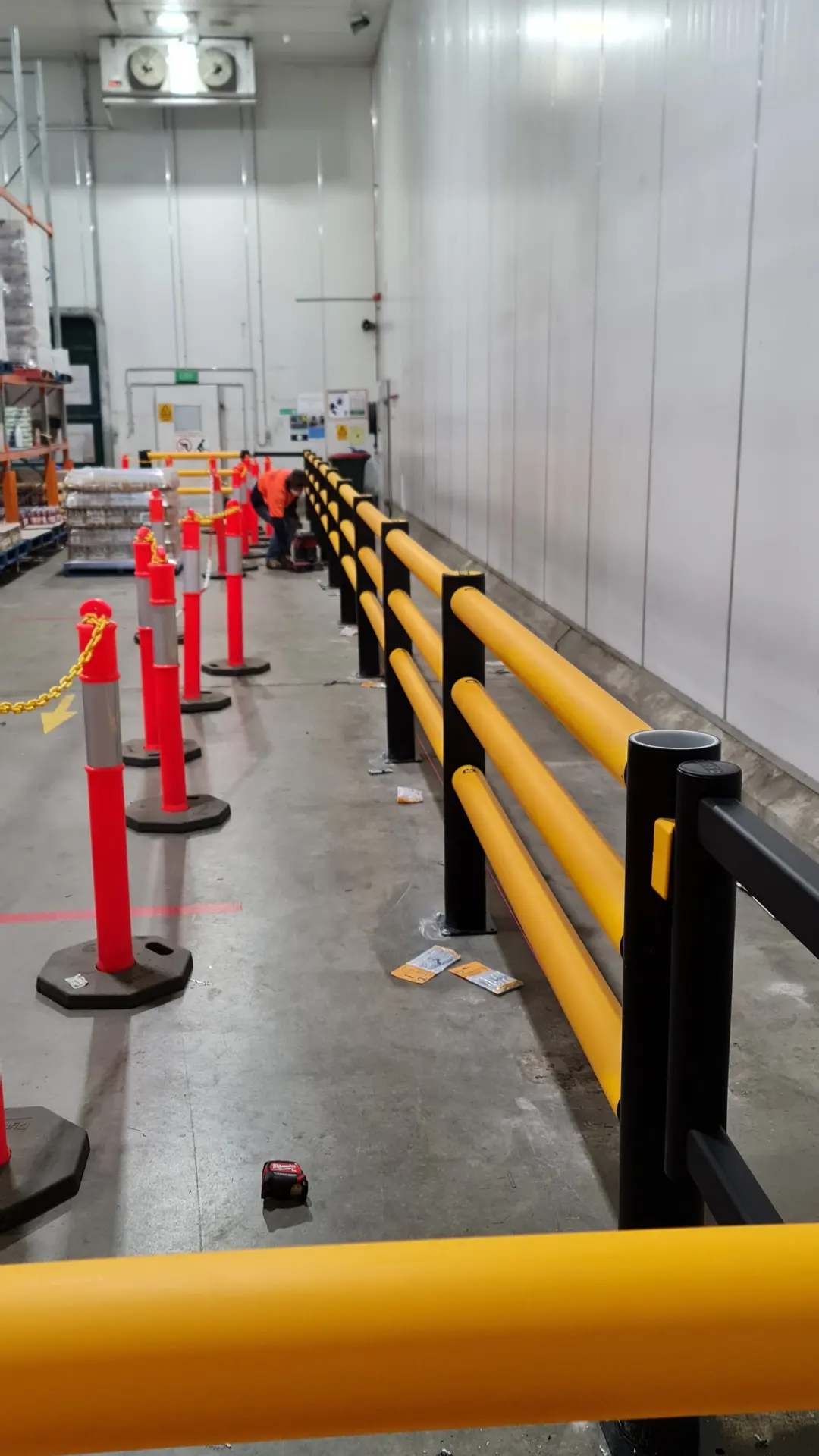
Coolroom safety and efficiency upgrade — major dairy processor

Challenge

What began as a safety upgrade in a working coolroom kept surfacing adjacent problems: racking condition, traffic segregation, dock surfaces.

Solution

A diagnostic-led program that evolved with the findings — selective racking rebuild, pedestrian and traffic segregation, safety barriers and bollards, mesh protection areas, dock anti-slip sealing and ongoing compliance management.

Why it worked

Nobody pretended the scope was known on day one. Each fix was sequenced around a live 24-hour operation, and the site ended up safer AND faster — because safety problems and efficiency problems are usually the same problems.

PHOTOS-254 SSO project photography filler

Manifest asset: PHOTOS-254

Why Choose SSO for Warehouse Efficiency?

We diagnose before we recommend

We don't arrive with a product to sell. We start by understanding where time is being lost and what is causing it.

Targeted improvements often cost less than you expect

A better picking path, a repositioned dispatch zone, a traffic separation — specific changes can have an outsized operational impact.

We focus on the operation, not just the storage

Racking, shelving and barriers are tools. The goal is a warehouse that runs better. We keep that distinction clear throughout.

We implement the change and support ongoing refinement

The warehouse will keep changing. We are the team that already knows the site when the next improvement is needed.

Frequently Asked Questions

The clearest indicators are: pick times that vary widely for similar orders, consistent receiving congestion even outside peak periods, the team developing informal workarounds for the same recurring situations, and near-miss incidents that are accepted as normal. Any of these suggests there are real efficiency gains available.

Often yes. Slotting — reassigning where stock is stored based on movement frequency — can produce significant efficiency gains with no capital outlay. Traffic marking and pedestrian route definition often require only floor paint and signage. The lowest-cost improvements are frequently the highest-return ones.

We start by understanding the current operation — not by proposing changes. That typically involves walking the warehouse, tracing pick paths and inbound flows, identifying where the team naturally bottlenecks, and reviewing what workarounds are in use. The findings usually point clearly to a small number of high-impact changes.

Rarely. Most targeted efficiency improvements — slotting changes, traffic marking, minor racking adjustments — can be completed in an operating warehouse, often zone by zone outside peak periods. The exception is where a significant physical reconfiguration is needed; that requires more careful sequencing.

A full fit-out starts with a blank building and designs the layout from scratch. An efficiency review starts with an operating warehouse and identifies targeted improvements to what exists. Most businesses experiencing warehouse inefficiency do not need a full fit-out — they need specific changes to specific problems. We recommend what the situation actually needs.

Describe where the time is being lost.

We will help you identify what is causing the friction and which improvements will have the most impact — without committing to a full reconfiguration before the diagnosis is done.

Related Solutions

Related Knowledge

Enquiry Cart ×
Loading....